Sports Cars > Bugatti Veyron EB 16.4
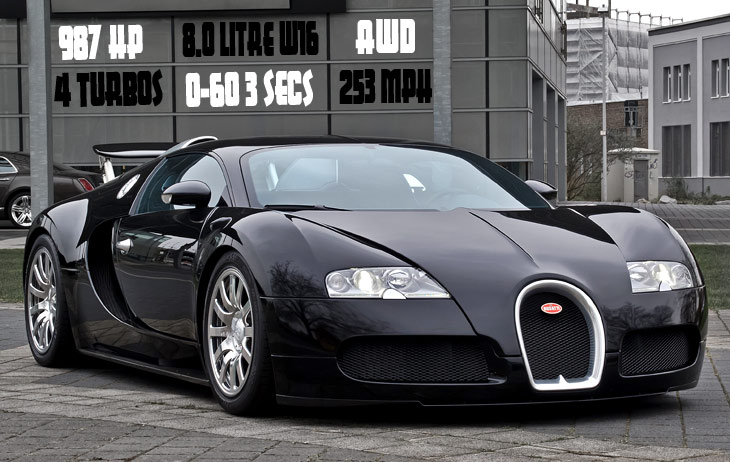

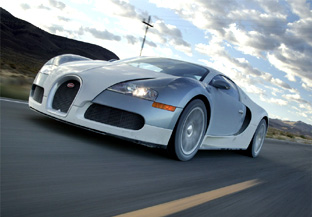
The Bugatti Veyron EB 16.4 was one of the, if not the, most eagerly anticipated supercars of all time. The Veyron, as a concept, was officially revealed for the first time in 1999 at the Tokyo Auto Show. Named the Bugatti EB 18/3 Chiron, the concept was powered by an 18 cylinder engine and showed the first styling features of the Veyron.
In 2000 at the Paris Motor Show the EB 16/4 prototype was unveiled. This car had almost identical styling to the production Veyron and was powered by a still insane, but slightly more realistic, W16 engine. A year later, in 2001, Volkswagen announced that they were taking the Veyron to production.
Engineering issues, the realisation of 1000 (useable) horsepower in a supercar, was the biggest problem facing Volkswagen engineers and designers. Issues included; finding a transmission capable of handling the cars immense power, cooling the engine, and not to mention getting the power onto the road in a manner the luxury supercar buyer was used to. However after literally years of exhaustive testing and record breaking engineering feats, the Veyron became a reality.
Some of the Bugatti Veyron EB 16.4 supercar's facts and figures:
253 mph - The electronically limited top speed.
257 mph - The theoretical top speed, on a perfect run.
2.3 mpg - Fuel economy when running at full speed
12 minutes - The time it takes to empty the fuel tank at top speed
51 miles - The distance covered while emptying the tank
0 - 60 mph - 3 seconds
0 - 125 mph - 7.3 seconds
0 - 187 mph - 16.7 seconds
0 - 250 mph - 55 seconds
250 - 0 mph - 9.8 seconds
The seven speed DSG transmission can handle up to 1106 lb ft of torque, 185 lb ft more than the Veyron develops.
If a Mclaren F1 traveling at 100 mph went past a stationary Bugatti Veyron, and the Veyron set off at full acceleration as the Mclaren passed, the Veyron would top 200 mph first.
1,000,000 - the price of a Veyron in Euros
1,121,000 - the price in US dollars
683,200 - the price in English pounds
YEAR OF SPECIFICATIONS: 2005
ENGINE: 8.0 litre W16 quad turbo
TRANSMISSION: 7-speed, DSG sequential AWD
MAX SPEED: 253 mph
0-60 MPH: under 3 seconds
HORSEPOWER: 987 hp @ 6000 rpm
WEIGHT: 1,950 kgs / 4,300 lbs
Bugatti Press release for the Veyron 16.4:
After four years of development, the Bugatti Veyron 16.4 was ready for series production. The most exclusive sports car of all time follows in the footsteps of the legendary Bugatti, those universally-coveted limousines and unbeatable racing cars of the 1920s and 1930s which today are among the most sought-after creations from the early days of automobile construction.
This brings to an end the era of design models and concept cars which since the late 1990s have signposted possible paths to the Bugattis of the future. Technologically futuristic and packed with creative engineering, the first Bugatti of the 21st century has arrived.
Merging the Past and the Future
The Bugatti Veyron 16.4's home is in Molsheim-Dorlisheim, the French town where, almost 100 years ago, Ettore Bugatti began to realize his lifelong dream of being a car manufacturer. The new workshop is not just where the engine and vehicle are assembled and tested, it is also the place where customers collect their Bugattis and drive them out onto the streets for the first time.
The aim is to turn Molsheim into an all-round Bugatti centre once again. While up to 70 new vehicles a year are built by hand in the new facility, neighbouring specially-equipped workshops are the scene of expert restoration work on historic Bugatti vehicles. Both past and future have found a new home here.
High Performance
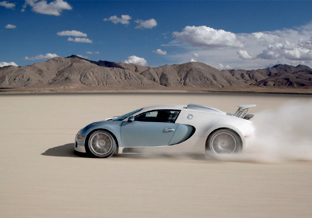
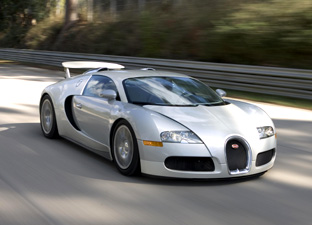
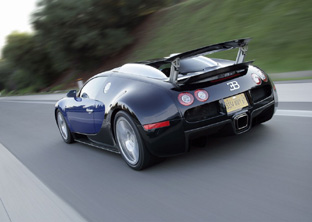
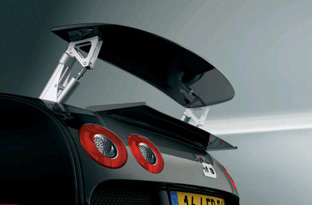
The car's safety systems have been designed to cope with its extraordinary performance, acceleration and speed. The single-piece carbon fiber monocoque alone scores maximum points in crash tests, while airbags give the driver and passenger additional protection. The high-speed tires designed specially for the Bugatti Veyron 16.4 (for vmax. > 350 km/h), sizes 265-68 R 500 A (front) and 365-71 R 540 A (rear), incorporate a further innovative safety feature in the form of the PAX System fitted to the wheels and tires, ensuring safe handling even after sudden pressure loss. Another Bugatti Veyron 16.4 component with a safety element is the rear spoiler. As well as providing the necessary downforce during high-speed travel, it acts as a kind of 'parachute brake' during emergency braking. Once precisely-defined deceleration forces are registered the spoiler tilts and the additional air resistance this generates reduces the braking distance to that of a lorry.
The Art of the Machine
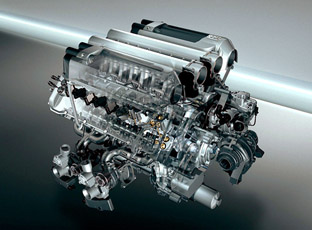
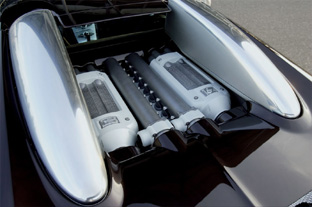
The W16 alloy engine developed by Bugatti for the Veyron 16.4 has a special and absolutely unique place in the history of sports car construction. Its design employs the space-saving VR principle with two particularly slender eight-cylinder blocks arranged at a 90-degree angle to each other.
1001 horsepower equip the Bugatti Veyron 16.4 with a level of acceleration unheard of in the sports car segment, propelling it from 0 to 60 mph in just three seconds and past the 200 mph mark in a mere 14 seconds. Thanks to its 923 lb-ft, the Bugatti Veyron 16.4's enormous propulsive power is not exhausted until it reaches 252.3 mph (406 km/h): the maximum speed for which chassis and drive train have been designed. Any further performance escalation is limited by current design and construction.
Also unique is the power transmission via an innovative directshift gearbox. Without any interruption in the power flow, the sequential seven-speed gearbox transmits the engine's power to the wheels via permanent four-wheel drive. Put simply, this means uninterrupted acceleration from a standing start to maximum speed: a feeling previously known only to jet pilots.
Exclusive, Classical, Functional
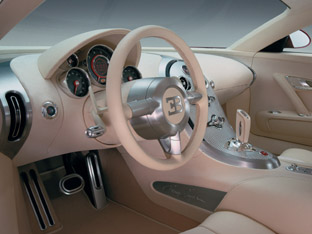
Both exclusive and highly functional, the interior of the Bugatti Veyron 16.4 will transport you to a world of your own. Superb leather, also two-tone if desired, quality metallic trim and beautifully designed and ergonomically laid-out controls characterize the Veyron cockpit.
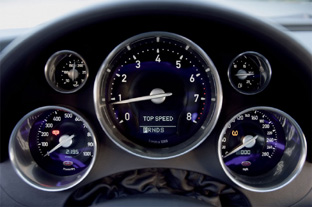
The Bugatti Veyron 16.4 instruments, with a large central rev counter surrounded by four smaller additional instruments also conjures up memories of the marque's legendary motor sport past. The deliberate avoidance of superfluous instruments and modern extras are an unmistakable statement of the car's uncompromising sportiness.
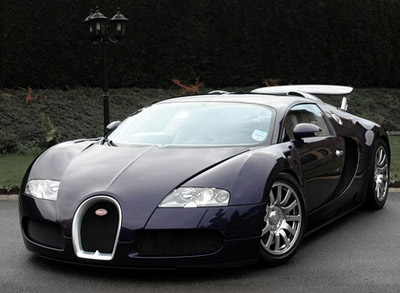
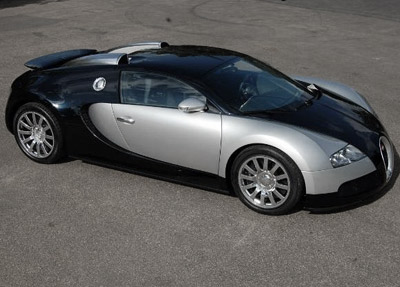
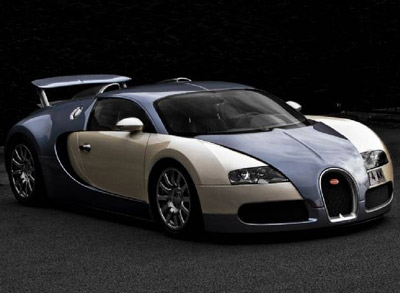
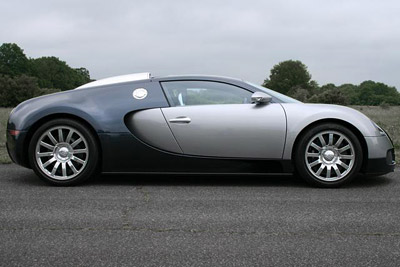
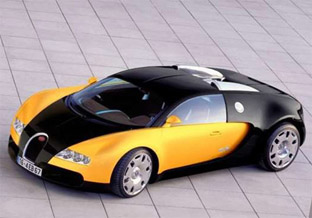
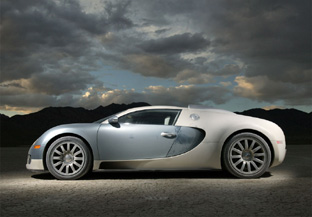
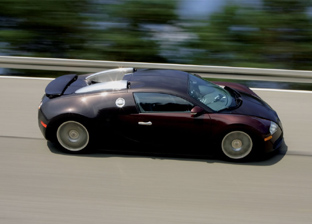
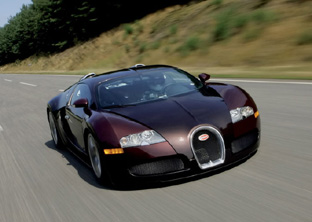
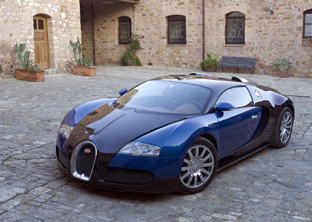
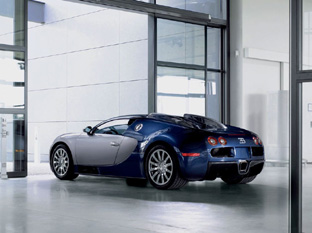
Unchanged on the series version of the Bugatti Veyron 16.4 is the classical two-tone paintwork. The designers have selected five separate colour combinations for the car: Each of the combinations features the bonnet, roof and rear in the darker of the two colours, with the sides and front wheel arches in the lighter colour.
--