| Make
|
Mazda |
| Model |
Shinari |
| Concept
year |
2010 |
| Production
year |
- |
| Engine |
- |


|
The Shinari concept introduces an all-new
design language for Mazda |
 |
 |
At the 2010 Paris Motor Show, Mazda are set to display
not only a new concept car - in the form of the Shinari
- but also a whole new design language courtesy of their
new head designer Ikuo Maeda.
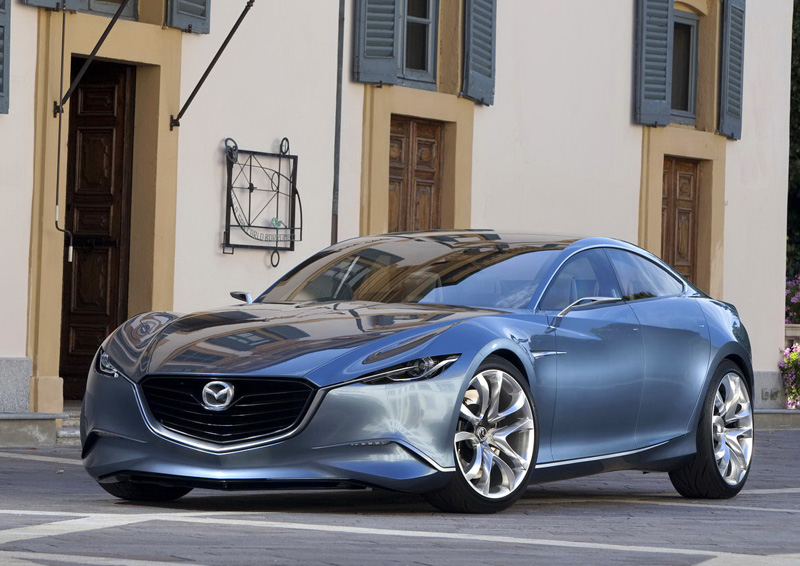
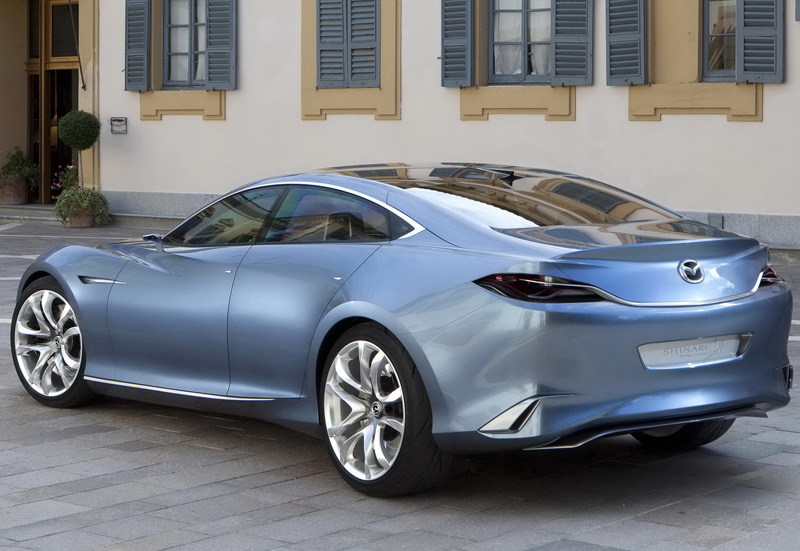
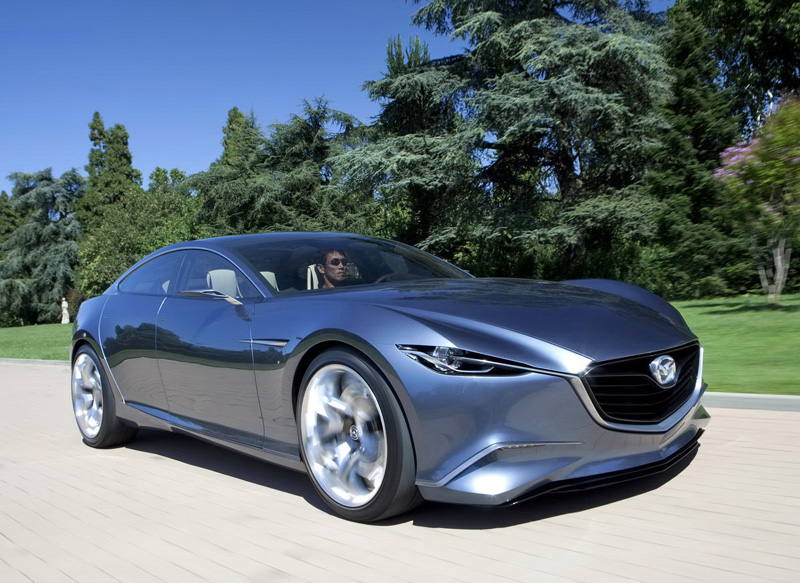
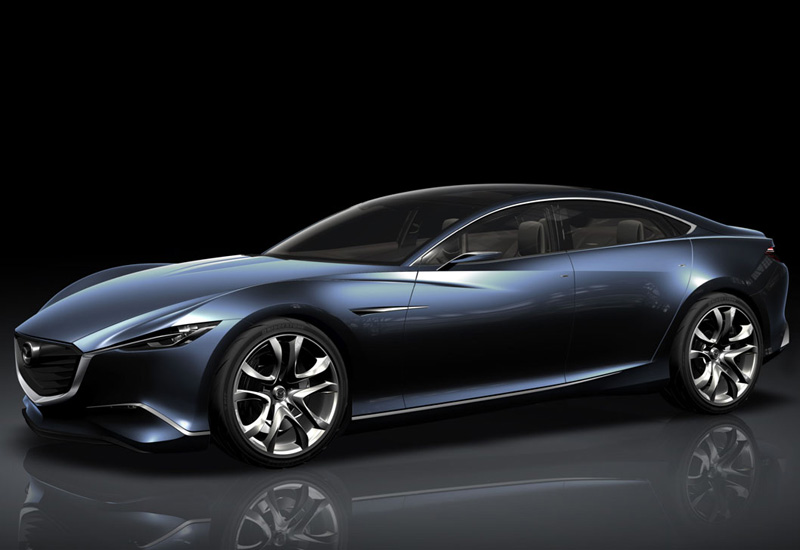
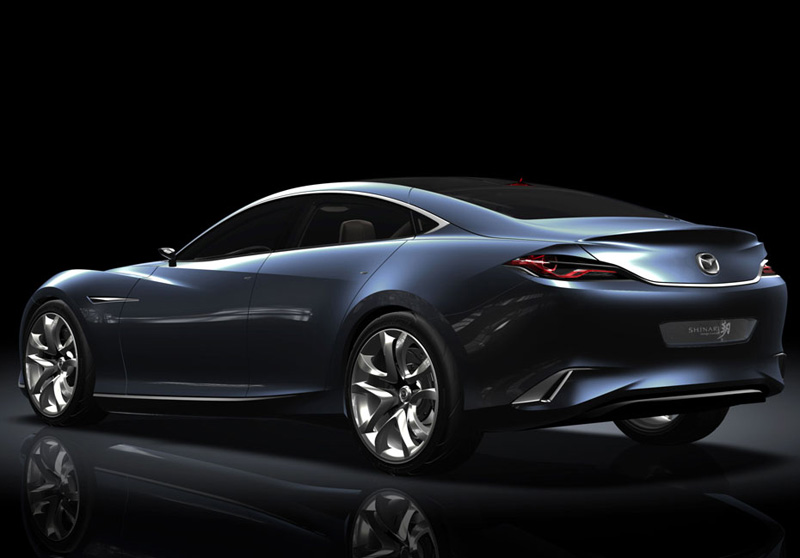
The Mazda Shinari is a sleek looking four door sedan with
crisp style lines and taut, muscular shape. The name of
the new design style used on the Shinari is Kodo,
which roughly translates as "soul of motion".
Presumably that explains why the Shinari looks like it's
doing 100mph when stood still.
Other styling elements of interest are the numerous brushed
aluminum accents which adorn the Shinari's bodywork. In
some areas these serve to highlight the cars contours,
while in others they are also used to link components
like the headlights and grille into one assembly.
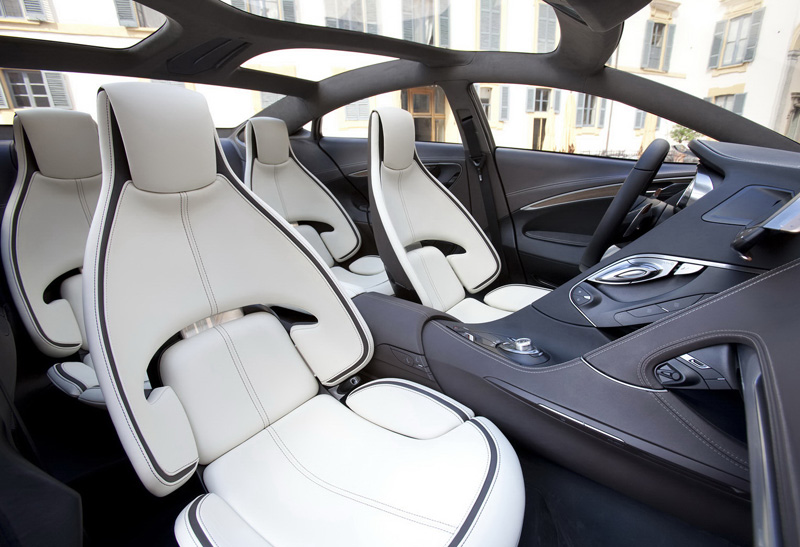
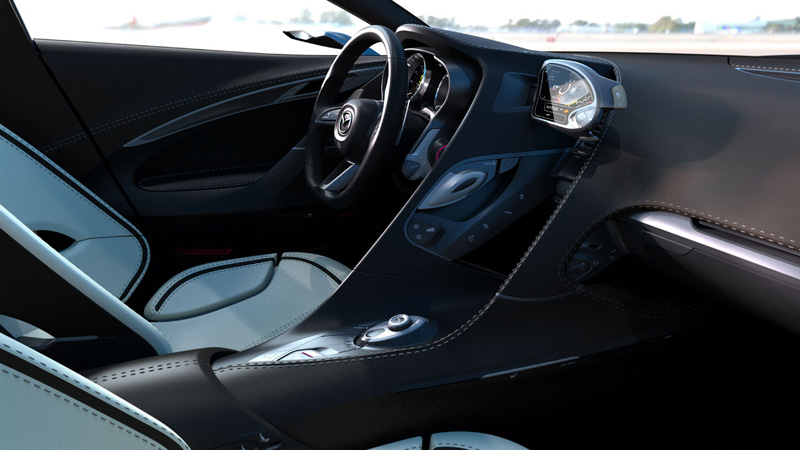
Thankfully, the interior of the Mazda Shinari doesn't
let down the good looks of the exterior. The driver is
met with a rather focused set of gauges and a centre console
which wraps up and over the dash to make the driver feel
a little like they are in their own purpose-built cocoon.
The materials used; dark brown and cream leather with
exposed stitching, coupled with aluminium trim, give the
interior a high class and high fashion feel.
Mazda Shinari official press release:
The Mazda Shinari is a four-door, four-seater, sports
coupe and a pure expression of the new design theme in
its idealised form. Mazda Shinari showcases several new
design elements that will carry forward into production,
and represents the first initiative by Mazda Design to
express ‘KODO – Soul of Motion’.
Ikuo Maeda, the head of Mazdas Design Division,
explains the new KODO design theme in this way: "In
our work to further evolve the expression of motion, Mazda
Design has focused on the strength, beauty and tension
found in the instantaneous movement of animals
at the very moment that the motion begins. This motion
is so full of vitality that it stirs the emotions of those
who see it. We have named it KODO Soul of
Motion, and our aim is to express movement with
forceful vitality and speed, embodying this design theme
in Mazdas upcoming models."
The Japanese word shinari describes the powerful yet supple
appearance of great resilient force when objects of high
tensile strength, such as steel or bamboo, are twisted
or bent. It also refers to the appearance of a person
or animal as it flexes its muscles in preparation for
a fast movement, and it is these images that form the
basis for the name of this concept car.
With a feeling of strength flowing across every panel
and part, the Mazda Shinari looks ready to leap forwards
at any second. Its form incorporates the expression of
a strong backbone running through the body, the sudden
release of pent-up energy, and the interplay of beautiful,
supple movements. The distinctive front fenders of the
Mazda Shinari represent the further evolution of the prominent
fenders introduced on the RX-8. They highlight the dynamic
movement expressed in the sides of Shinari , in a style
that is both sporty and elegant.
Together with the further three-dimensional sculpting
of the front grille, the Shinari design proudly emphasises
the Mazda lineage. There is a powerful line of movement
originating at the grille and continuing through the bonnet,
fender, front lamp modules and bumper. Finally, an aluminium
floating bar linking the grille with the headlights enhances
the three-dimensional expression of speed.
In the interior of the Shinari, Mazda Design has created
the ‘ultimate athletic space’ focused on linking ergonomics
with basic mechanical functions. It has designed the optimum
space for the driver’s cockpit, to enable the driver to
focus on the task of driving, as well as the passenger
environment, creating a sense of openness. In the Shinari,
Mazda offers new ideas for the human-machine interface
in cockpit design, enabling the driver to switch at will
between three modes: Business, Pleasure and Sport, to
obtain the maximum enjoyment from driving – whatever the
purpose of the journey. |
|