|
What
is Fiberglass?
Fiberglass is a composite material widely used in the automotive
industry, kit cars are often made from fiberglass as are many
sports cars including the Chevrolet Corvette.
Fiberglass is an incredibly versatile material and it comes in
several forms. Almost everyone has seen fiberglass insulation
and anyone who has touched it will recall the itchy feeling often
with a little rash which develops afterwards. This Is because
the minute shards of glass cut into the skin and cause irritation.
The fiberglass used in the automotive industry is different from
insulation fiberglass. It usually comes in a mat, tissue or cloth,
although a chopped strand mixed with resin is often used for large
applications such as boat hulls.
 Working
with Fiberglass is an unpleasant business due to the fumes from
the resin and itchiness of the fiberglass. Whenever you are working
with fiberglass use gloves, overalls and a respirator, take frequent
breaks for fresh air if you are in a confined space. To reduce
the itching of fiberglass try not to scratch . Instead wash the
affected areas gently with cool water as often as possible. Working
with Fiberglass is an unpleasant business due to the fumes from
the resin and itchiness of the fiberglass. Whenever you are working
with fiberglass use gloves, overalls and a respirator, take frequent
breaks for fresh air if you are in a confined space. To reduce
the itching of fiberglass try not to scratch . Instead wash the
affected areas gently with cool water as often as possible.
MATERIALS
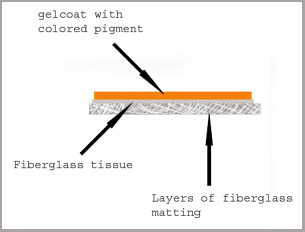
Gelcoats are the shiny face of fiberglass, gelcoats are what you
see on most fiberglass vehicles (which haven't been painted) or
boat hulls. Gelcoats consist of a thick gel-like resin mixed with
a colored pigment, it is the first thing laid into a mold and
therefore when the mold is removed it becomes the exterior.
Below is simple diagram showing how many fiberglass bodies are
constructed, there are other methods and this is just a common
example.
Tissue
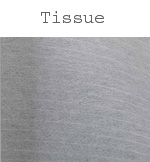
Fiberglass tissue as the name suggests is a very thin tissue like
layer of fiberglass, it is very smooth and porous and the tissue
sits underneath the gelcoat. Tissue helps to smooth out the inherent
roughness of fiberglass matting, while also adding strength.
Mat
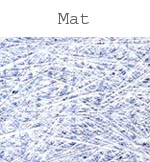
Fiberglass matting makes up the bulk of any fiberglass bodied
car. Several layers are built up one on top of another until the
desired thickness and strength is achieved. This is what you might
see if you look at the inside of a fiberglass panel.
Cloth
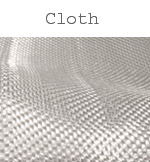
Fiberglass cloth is strong and is often used where it may be visible
and therefore aesthetics are important. One of the downsides of
fiberglass cloth is that because the strands are neatly woven
the layers do not intermesh like they do with the disorganised
and loose strands on the fiberglass mat. Therefore the layers
of cloth sit on top of one another, rather than meshing together
like the fiberglass mat.
Resin and Hardener
Without resin the fiberglass itself would be useless for building
anything requiring rigidity. Resin is mixed with a catalyst before
application to the fiberglass. The drying process involves a chemical
reaction which has several variables including, the amount of
catalyst, temperature, humidity, and any water present in the
fiberglass resin (water shouldn't be there!).
As a personal example I once added sand to fiberglass resin to
achieve a rough texture needed for this particular application.
The sand was ever so slightly damp. The resin without sand dried
quickly and without event, the resin with sand in took several
days to fully harden.
When the chemical reaction between the catalyst and fiberglass
resin takes place heat is produced, depending on the thickness
of the resin the temperatures can get quite hot. Enough to melt
plastic in extreme cases.
End result
The results which can be achieved with fiberglass are quite impressive.
Its properties allow anyone to make an exotic bodyshell for a
car. Once fully hardened and sealed with resin or a gelcoat fiberglass
is waterproof, relatively light weight and when done properly
it is extremely strong. It is reasonably inexpensive when compared
to the alternatives, in short it is an ideal material for the
automotive field.
What is Carbon fiber?
|
