| Make
|
Bugatti
|
| Model |
Galibier
16C |
| Concept
year |
2009 |
| Production
year |
- |
| Engine |
W16 |


|
The Bugatti Galibier 16C uses the same
W16 engine from the Veyron |
 |
 |
The Bugatti Galibier 16C is the next model due out from
Bugatti. Production of the Galibier 16C is due to start
in 2013, one year after the Veyron's production run is
supposed to end.
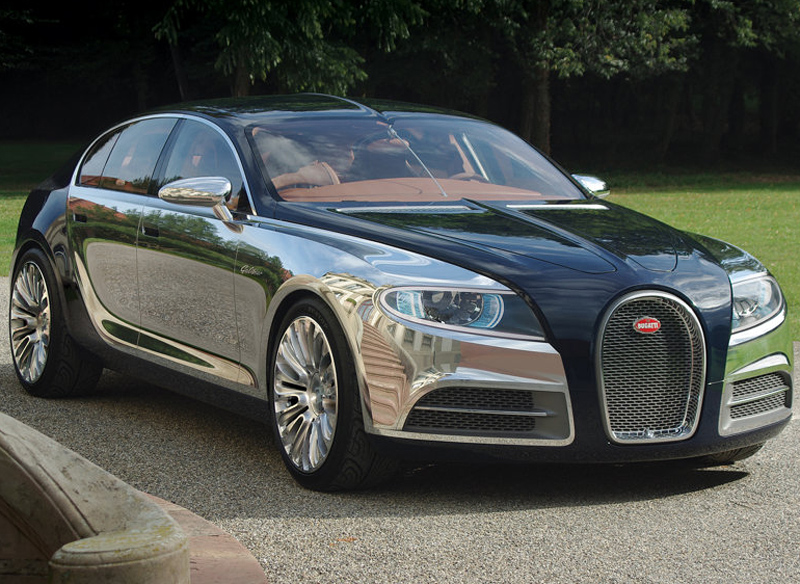
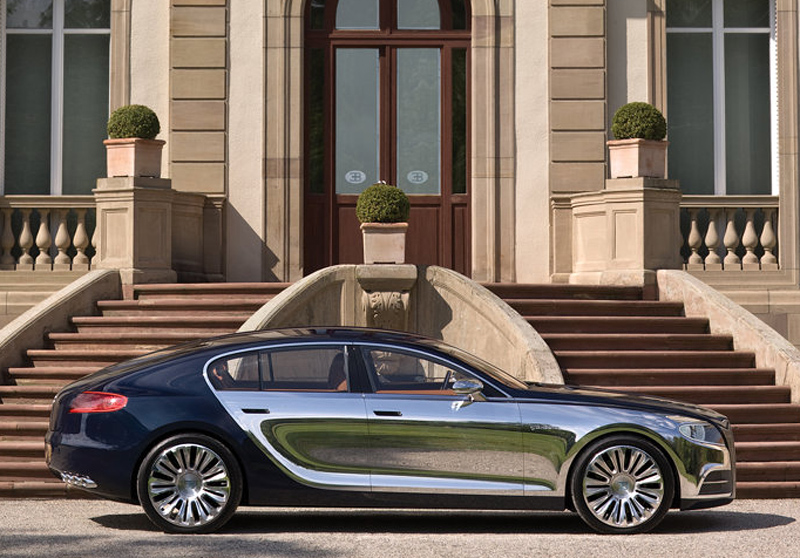
Like the Veyron the Galibier 16C uses a prominent two-tone
color scheme, although for the Galibier 16C concept Bugatti
have gone one step further and added a chrome on midnight
blue finish.
At the heart of the Bugatti Galibier 16C is the same immense
W16 engine from the Veyron. Except where the Veyron's
powerplant benefited from four turbochargers the version
used in the Galibier 16C is fitted with two, reducing
power output to around 800 hp. Power is sent to all four
wheels through an 8 speed automatic transmission. No less
than 8 exhaust pipes at the rear hint at the massive performance
potential.
The doors and front arches of the Galibier 16C are made
from aluminium, but the rest of the body is formed from
carbon-fibre, as is the front end of the chassis.
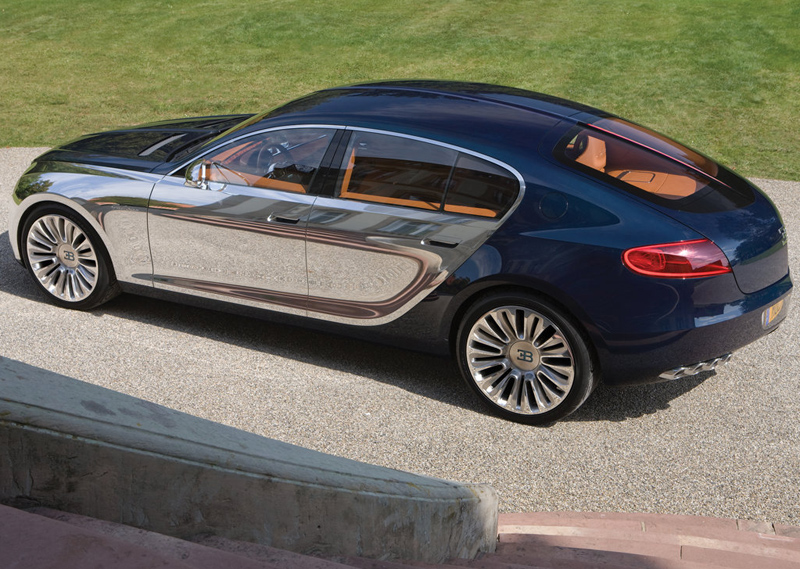
The styling of the Bugatti Galibier 16C is influenced
by the Bugatti Type 57 Atlantique, as evidenced by the
spine which runs down the centre of the car and bisects
the rear window. The name recalls a special edition model
of the Type 57.
Similar and related vehicles:
Bugatti EB 118
Bugatti EB 218
Bugatti Veyron
Bugatti EB110 SS
Bugatti EB110 GT
Bugatti W18 Chiron prototype
Bugatti Galibier 16C press release:
As the climax of its centenary celebration ceremonies,
Bugatti Automobiles S.A.S. presented customers and opinion-makers
with the Bugatti 16 C Galibier concept, intended to be
the most exclusive, elegant, and powerful four door automobile
in the world last weekend in Molsheim. At the historic
site where Ettore Bugatti once laid the cornerstone of
his company, Bugatti’s current president, Dr. Ing. Franz-Josef
Paefgen emphasised that the Galibier is one of several
concept studies with which the company is considering
for the future of the Bugatti marque.
Art - Forme - Technique: those are the brand values to
which Ettore Bugatti and his son Jean oriented themselves
in order to develop even more powerful engines and even
more noble body designs for each new model, which were
without equal in quality, handling, speed and elegance.
In the process, they experimented again and again without
compromise with new materials; thus was Bugatti one of
the first manufacturers to use aluminium parts for bodies,
engine blocks and wheels.
Art - Forme - Technique are also the brand values to which
the design and engineering team of Bugatti Automobiles
S.A.S. oriented themselves in the development of the Galibier.
With this new four-door concept car, Bugatti assumes anew
a leading role in the use of new material combinations.
Thus the body is constructed of handmade carbon fibre
parts coloured dark blue so that, when illuminated, the
woven structure shimmers through strikingly. Carbon fibre
not only possesses unusually great rigidity but is also
especially light. The wings and doors are out of polished
aluminium.
The Galibier’s design masters the challenge of uniting
sportiness with the comfort and elegance of a modern four-door
saloon. The basic architecture picks up on the torpedo-like
character of the Type 35, which was already revived in
the Veyron, and reinterprets it. With the typical Bugatti
radiator grille, big round LED headlights and the clamshell
running the length of the vehicle which became synonymous
with the brand identity under Jean Bugatti in the Type
57, this car transports the Bugatti genes into the modern
world.
Beneath the bonnet, which folds back from both sides,
there resides a 16-cylinder, 8-litre engine with twostage
supercharging. What makes this engine special is that
it was developed as a flex-fuel engine and can optional
be run on ethanol. Four-wheel drive, specially developed
ceramic brakes and a new suspension design enable the
agile, always-sure handling of a saloon of this size.
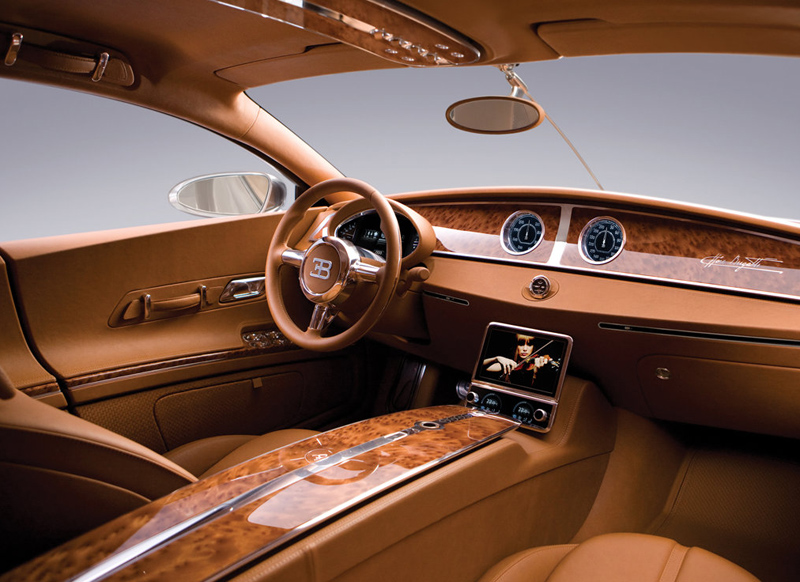
The interior reflects the elemental design of the exterior.
The dash panel has been reduced to the essential; two
centrally located main instruments keep even the rear
passengers constantly informed of the actual speed and
previous performance. Parmigiani, the Swiss maker of fine
watches, created the removable Reverso Tourbillon clock
for the Galibier, which may be worn on the wrist thanks
to a cleverly designed leather strap.
Source: Bugatti via Netcarshow.com |
|