| Year
(of specifications) |
2011 |
| Engine |
5.0
litre V8 naturally aspirated |
| Transmission |
6
speed manual or automatic RWD |
| Max
speed |
- |
| 0-60
mph |
4.9
seconds |
| Horsepower |
412
horsepower |
| weight |
- |
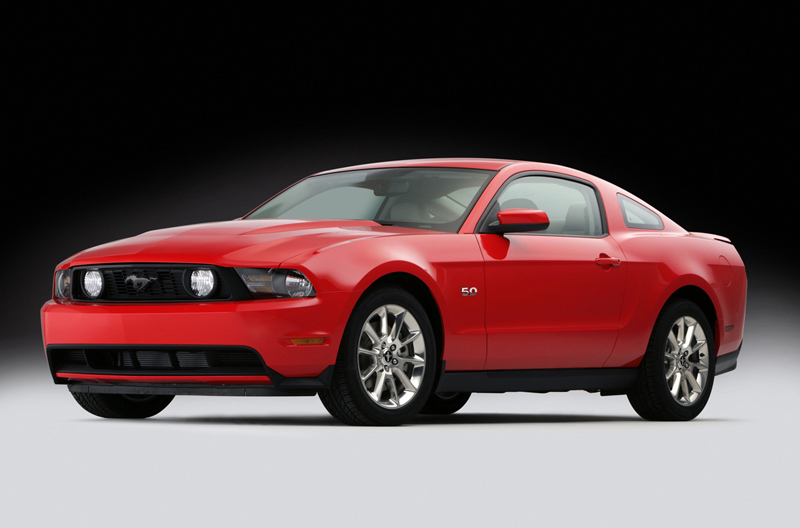
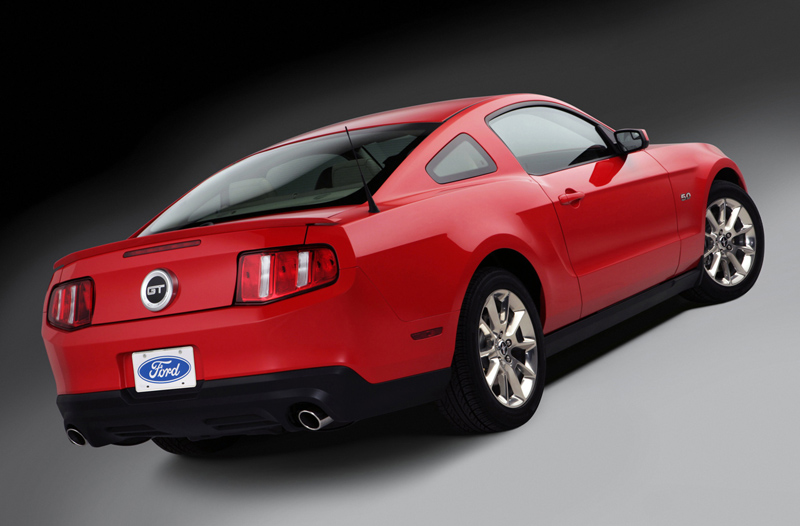
The 2011 Mustang ushers in the return of the 5.0 litre badge
for Ford's most iconic model. The previous 4.6 litre engine,
while technically superior, never attained quite the same cult
status as the 5.0 V8 used in the Fox body Mustangs. However
the cylinder volume is about the only thing the old 5.0 V8 and
new 5.0 V8 share.
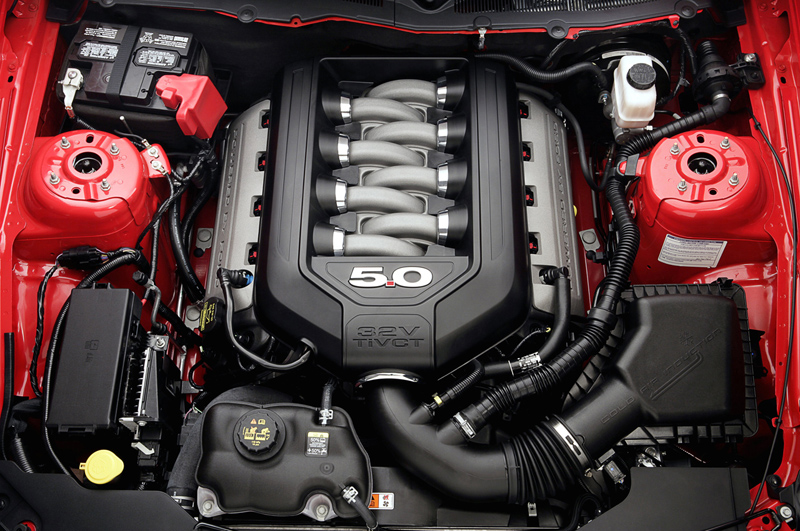
The modern 5.0-liter four-valve Twin Independent Variable Camshaft
Timing (Ti-VCT) V-8 engine in the 2011 Mustang GT produces 412
horsepower and 390 ft.-lb. of torque. At the same time, fuel
economy is superior to the previous model
"This all-new 5.0-liter engine is the next chapter in
the development of the world-class Mustang powertrain portfolio,"
said Derrick Kuzak, group vice president, Global Product Development.
"It's a thoroughly modern engine for the times, delivering
the performance and fun-to-drive factor that enthusiasts want,
while improving fuel economy."
The 5.0-liter V8's ability to deliver 412 horsepower, with improved
drivability, tractability and fuel economy over the 2010 Mustang
GT is possible thanks to high-tech engine internals including
Ford Racing components and an all-new aluminium head which offers
better airflow into the engine.
The six-speed automatic transmission on the 2011 Mustang GT
will deliver up to an estimated 25 mpg highway and 17 in the
city. This is up from 23 mpg highway and 17 city for the 2010
model. Six-speed manual transmission Mustang GT models for 2011
are projected to deliver 24 mpg highway and 16 city, matching
the 2010 model but delivering significantly more horsepower
and performance
While the new engine is by far the most significant change for
the 2011 Mustang, there are other upgrades to the car which
help raise the performance.
The 2011 Mustang GT features an enhanced rear lower control
arm to add stiffness, improve powertrain NVH control and sharpen
handling. A stiffened rear stabilizer bar for better on-center
steering is also included. Stabilizer bar diameters, spring
rates and dampers all have been tuned for improved dynamics.
A Brembo brake package upgrade will be available for serious
enthusiasts. This package includes 14-inch vented front discs
from the GT500 Mustang, unique 19-inch alloy wheels and summer
performance tires.
Similar and related vehicles:
 Ford GT
 Ford GT Tungsten
 Ford Mustang GT
 Ford Mustang GT-R Concept
 Ford Mustang SVT Cobra R
 Ford Mustang Shelby GT500
 Ford Mustang Shelby GT500KR
 Ford Mustang Shelby GT
 Ford Mustang Shelby GT-H
 Ford FPV GT-P
 Ford Racing Puma
 Ford Sierra RS Cosworth
 Ford Focus RS
|
|