Home
> Hot Hatches > Ford Focus RS Mk1
Introduction
The Ford Focus RS Mk1 appeared in 2002 - two years after it had been
teased as a concept
car. Before its introduction most people were expecting, and hoping
for, an AWD beast to step into the giant shoes left over since the
departure of the Ford Escort Cosworth. However Ford decided that a
FWD platform with a 'torque biasing' differential would be good enough.
The system was designed to compensate somewhat for the 'torque steer'
phenomenon which occurs in powerful front-wheel-drive cars. It did
work, but not perfectly - there was still noticeable torque steer
under heavy acceleration. Later cars had less aggressive torque steering
thanks to a variety of small upgrades and tweaks to the model over
the single year it was produced. These upgrades included a revised
ECU map which improved engine smoothness at idle and reduced fuel
consumption, more durable seat cushions, and two small rubber rings
on the throttle cable to reduce vibration - look for pink ones, they're
the newer parts. Quaife, the manufacturer of the Focus RS Mk1's differential
also made some beneficial changes to the unit for the last 1000 cars.
In total just over 4,500 examples were produced.
Specifications
| Year (of specifications) |
2002 - 2003 |
| Engine |
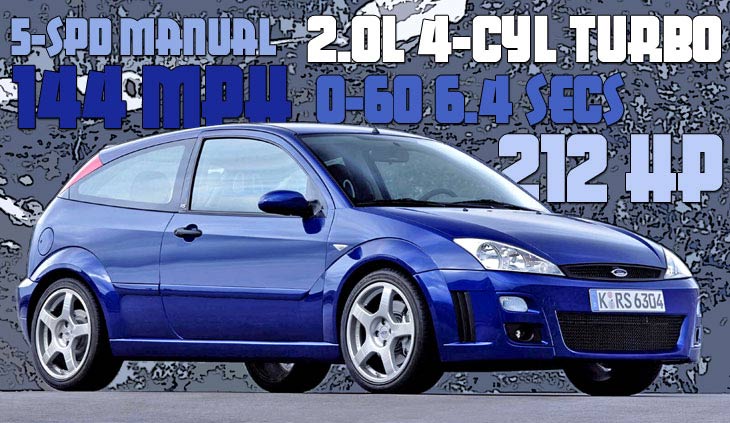
2.0 litre, 4-cylinder, turbocharged |
| Transmission |
5 speed manual FWD |
| Max speed |
144 mph |
| 0-60 mph |
6.4 seconds |
| Horsepower |
212 hp @ 5,500 rpm |
| weight |
1,278 kgs / 2,817 lbs |
Drivetrain
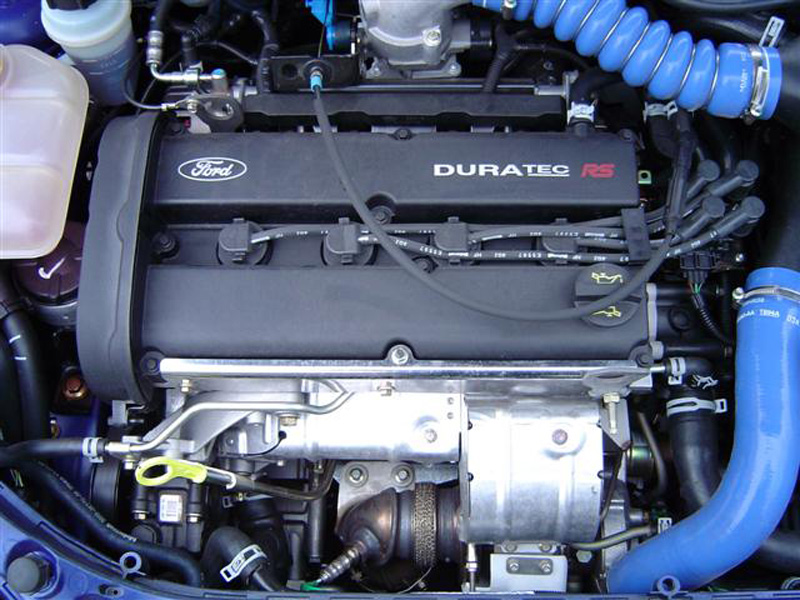
Powering the Ford Focus RS Mk1 was a turbocharged, 2.0 litre, 4-cylinder
engine which featured forged pistons, con-rods and crankshaft, hardened
valve seats, and a stainless steel exhaust system.
Overall it's a tough little engine but there are a few areas which
need to be maintained and regularly checked. First of all the cambelt
should be replaced at 60,000 miles - not 100,000 like Ford recommend.
If it isn't the idler pulley can split, resulting in a shredded belt
- possibly leading to disastrous consequences. When changing the cambelt
its advisable to also replace the auxiliary belt and its idler system.
However the weakest link in the Focus RS Mk1's engine is the chargecooler
pump. In order to allow for a shorter and more compact intake duct
than would be possible with an air-to-air intercooler, the engine
features a water-cooled chargecooler. Failure of this system can allow
the chargecooler coolant to reach boiling point - as you can imagine
this isn't good. The inbound air can be so hot it can damage the engine's
internals, including melting the sparkplugs - or even the pistons!
Performance-wise the engine of the first generation Focus RS is adequate.
By current standards 212 horsepower for a top-level hot hatch is pretty
low. But in 2002 it was enough to make the car a performance bargain
- and it keeps that accolade to this day. The strength of the Mk1
Ford Focus RS's performance came from its impressive peak torque output
figure of 229 lb-ft @ 3,500 rpm. The power was sent to the front wheels
through a tough and durable manual gearbox and Quaife limited-slip
differential. If the engine is highly modified, the standard transmission
has been known to comfortably handle up to 400hp in its standard form.
Thanks to its tough and potent drivetrain the Focus RS Mk1's 0-60
mph time is just 6.4 seconds. The top speed of 144 mph should satisfy
most drivers daily needs!
Suspension, Brakes and Wheels
The suspension setup is a relatively custom affair, and it only shares
a few components with the standard Ford Focus. First up the RS has
a wider track and stiffer spring and damper rates than the base car.
Larger wheel bearings and sturdier lower a-arms are also unique to
the car.
Braking comes courtesy of four-piston Brembo calipers. The brakes,
in general, are up to most of the abuse they'll receive during their
lifetime. However some owners have reported that a vigorous track
day can result in warped brake discs. A popular cure for this is to
replace the standard discs with upgraded AP Racing units.
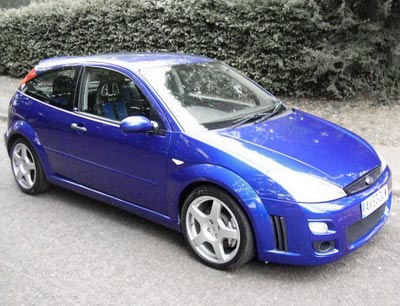
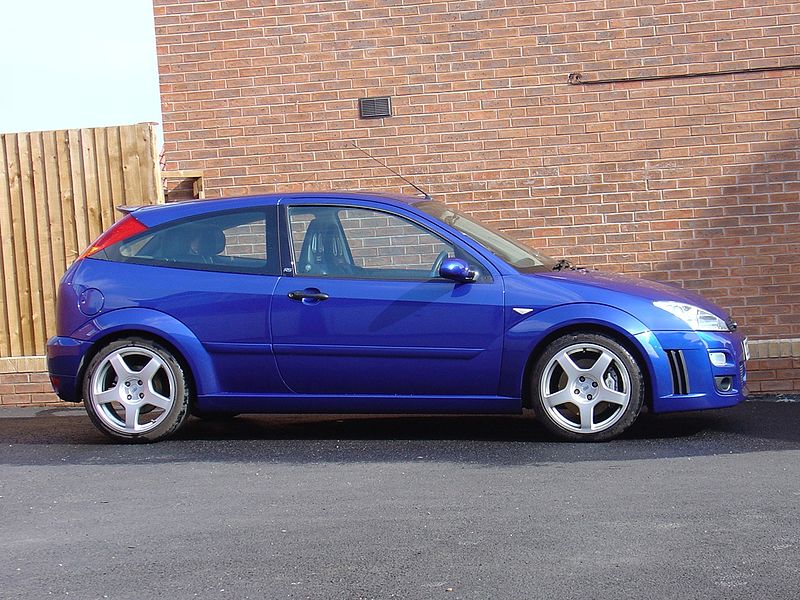
Nice looking and simply styled 5-spoke, 18" OZ Racing wheels fit the
car beautifully. They were specifically designed for the Focus RS.
Bodywork
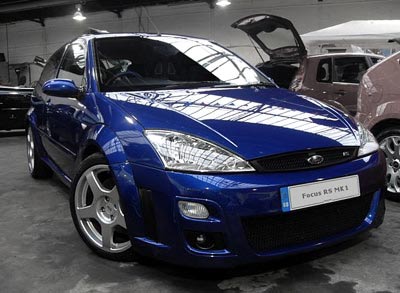
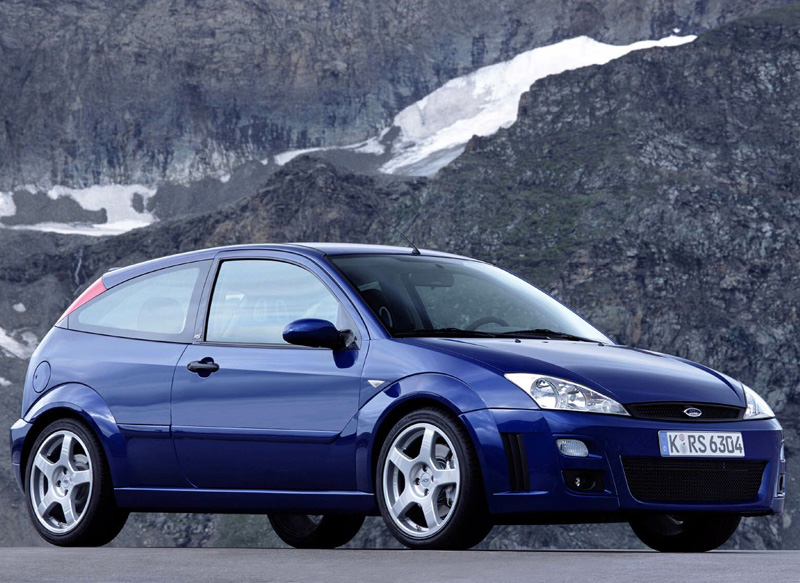
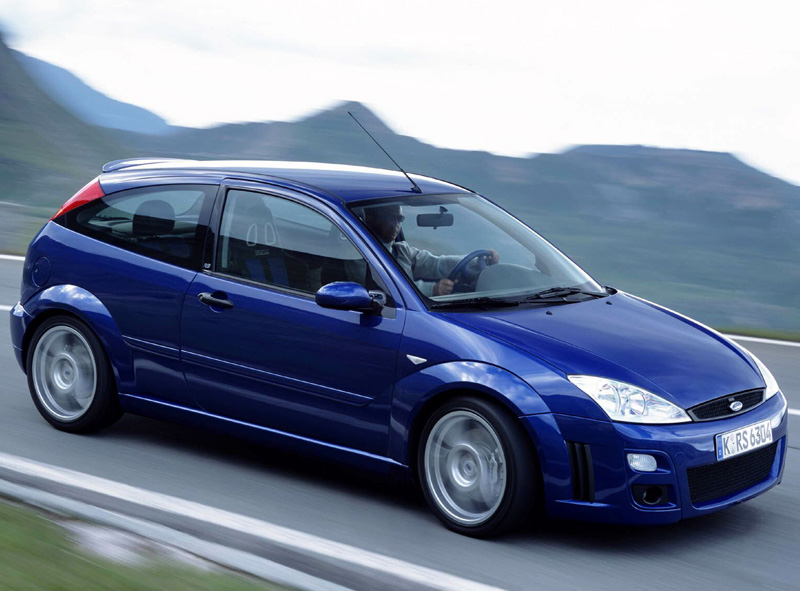
The Ford Focus RS MK1 has relatively subtle, but also noticeable,
upgraded bodywork which identifies it from its slower brethren. The
doors, tailgate and bonnet are the only body panels shared with other
Focus models. Sadly that means some of the panels can be difficult
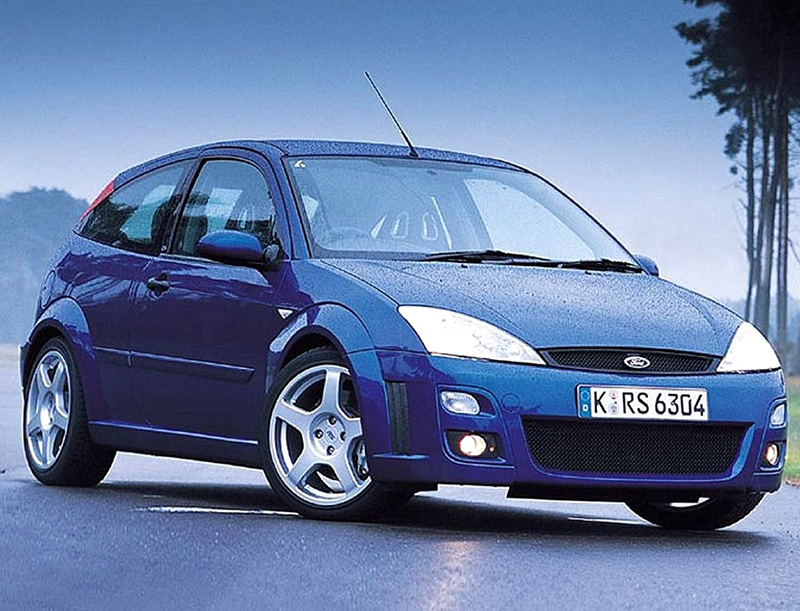
to source after an accident. From the front, the Focus RS Mk1 looks
the business. Smattered across the front bumper are a multitude of
vents, intakes and driving lights which give the car a purposeful
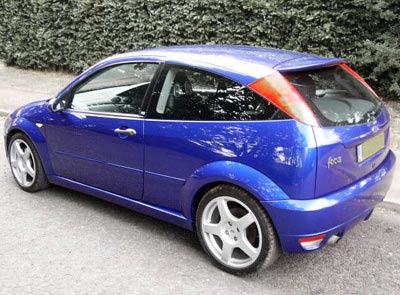
look when coupled with the slightly extended wheel arches. Viewed
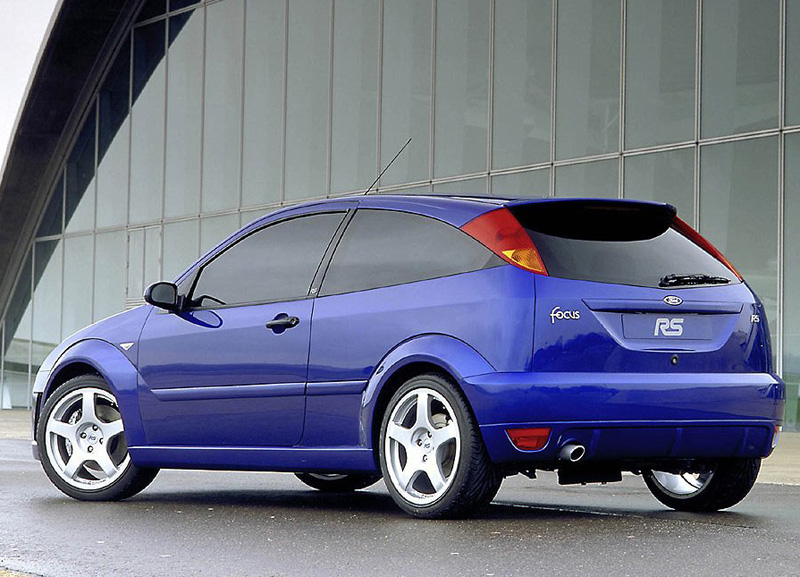
from the back the first-gen Focus RS is a little less distinctive.
There's a nice looking bumper with some sort of half-attempted faux-diffuser
integrated into the lower section, a small roof-mounted spoiler, and
that all-important 'RS' badge. The car was only sold in one color,
thankfully it was a good one. Metallic 'Imperial Blue'.
Interior
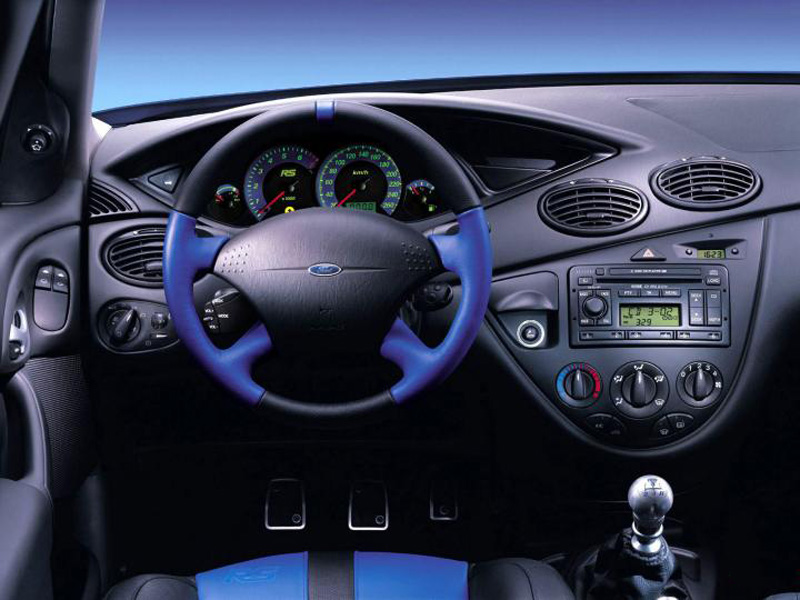
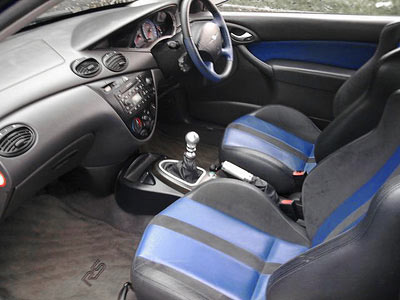
The interior of the Mk1 Ford Focus RS is set apart with a range of
blue-accented trim elements designed to match the paintwork. Unfortunately
it looks a bit tacky and aftermarket. The seats are supportive Sparco
units, but early cars suffered from sagging seat cushions - this was
fixed under warranty and later cars didn't have the same problem.
Later cars also got a small 'engine start' label next to the ignition
button to make things a little clearer.
Similar and related vehicles:
 Ford Focus RS Mk2
 Ford Focus RS500 Mk2 (2010)
 Ford Racing Puma
 Ford Sierra RS Cosworth
Reviews below: write
a review
There are no reviews on this vehicle yet.
|